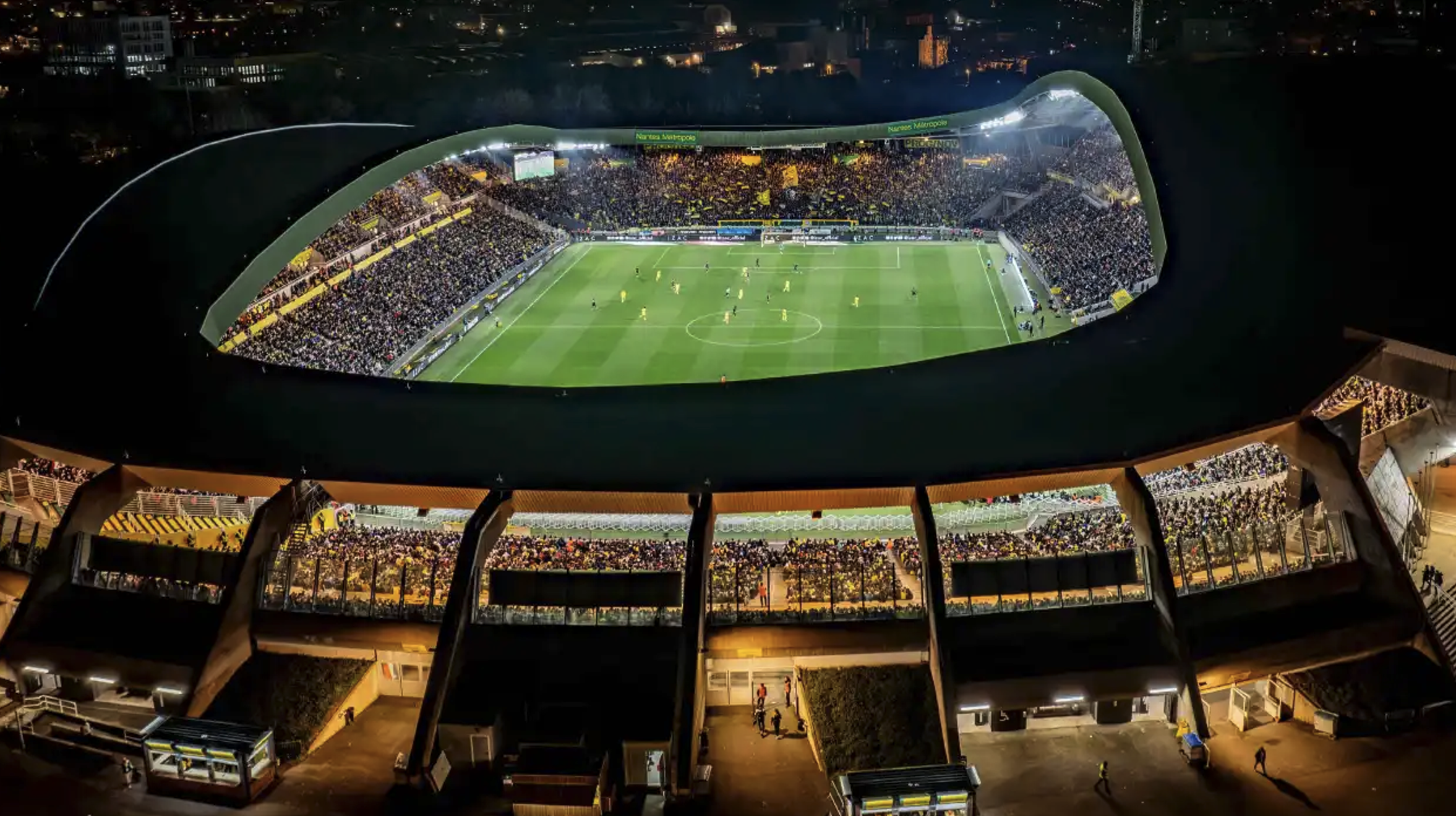
The asset was fine. The business was not.
A heritage football club lost three quarters of its enterprise value in eight months without losing its stadium, its academy, its license or its supporters. The franchise justified the price. The trading book was supposed to pay for it but didn't. This is how that happens, and how an operator-integrator approaches it.
A club's value sits in two places: the franchise, which is durable, and the trading book, which is not. Sellers price the first and get paid on the second.
01The situation
A heritage club had been quietly on the market for years. The owner wanted out at a number anchored to the capital he had put in, not to what the business generated. Institutional capital and investors circled it repeatedly.
The asset was marketed on five pillars: a top-division license, a productive academy, low-cost occupancy in a municipal stadium, a contracted commercial base, and a pipeline of player sales. All described the franchise. The fifth represented expected cash and was where price leaned.
02What happened
The club was relegated. Media income fell away, the budget was cut nearly in half, and the squad repriced overnight. A player loses roughly half his value the first time he plays in a lower tier. When the transfer window opened, the pipeline was tested in public. And that test was not good, departures produced roughly a quarter of what the market expected. The majority of value came from one player and the “pipeline” cleared at distressed prices.
03Where the value went
Value didn't erode slowly, it fell drastically within an eight-month stretch, and the biggest single correction wasn't sporting performance.
The cost base
Club budgets in football are presented as cash. Amortisation, agent fees, image rights and interest on shareholder loans usually sit outside them. Add those back in and true costs can run 20–40% above a marketed figure. A club with no bank debt may still carry the owner's loans to cover losses and a buyer inherits them.
This means that the purchase price is never just the capital requirement. Price, current accounts and operating runway are three separate numbers. All have to be modeled.
The leverage
The real question is, can the club service its debt and will anyone lend? A credit committee sees an acquisition price that sets a large borrowing requirement. Repaying it depends on a squad that depreciates and player sales with uncertain timing, all under a regulator spotlight that caps spending against revenue.
Without that senior credit, the funding gap has to close in other ways:
- More equity, which compresses returns and narrows the buyer pool.
- A lower price, set to what debt will support.
- Seller paper, deferred consideration or vendor loans.
- Seller participation: a share of future transfer proceeds, sell-on rights on named players, or earn-outs tied to promotion.
- Sell the best players in the trading window, reinvest a fraction, and renegotiate price.
If credit won't fund the stack, the problem then is likely price, not structure.
04The signal nobody priced
Supporters had withdrawn support of the owner, not from the club. That makes a change of control a revenue event in its own right. The fastest controllable income in the business was sitting untouched while every model priced player sales.
05How an operator underwrites it
Operator-acquirers focus on the business, the asset is secondary. They also focus on the fundamentals and start with a different question. What does it cost to keep the club funded for three years while it earns its way back? That sequencing matters because a mistake at an early step cannot be fixed by a later one.
- Split the asset into its layers: license and catchment, academy, operating business, stadium and land optionality. Sellers price the first layer, but the buyer is really acquiring the third.
- Discount the pipeline to 25–33% of headline using the club's own track record of realised sales. Treat anything above that as upside. Only live bids count as evidence of a player's value.
- Rebuild the cost base as the annual cash the owner must inject, not as EBITDA.
- Model what the seller is most likely to do, not what he says he will do. Either close before the window opens, or price his window sales as an explicit adjustment to the deal.
- Take the senior tranche to two lenders before agreeing the price. If the stack can't be raised, the entry price is wrong.
- Underwrite debt coverage excluding player trading. Transfer income funds reinvestment, never interest payments.
- Where a credible pipeline exists, finance the instalments owed by buying clubs rather than the acquisition itself.
- Fund two to three years of operating runway at close.
- Put one person in charge. Consensus governance fails under distress.
- Lead with demand. Re-engage supporters and reprice in the first season.
- Sell only the players the regulator requires. Hold the rest until a promotion push resets their value.
- Decide the exit before entry: promote and sell, hold a trading annuity, or develop the land with the club as anchor tenant.
The transferable lesson
Heritage does not service debt. Cash does.
Every error in this sequence traces to one substitution: the durable characteristics of the franchise were used to justify a price that only the fragile characteristics of the business could support. The history, the license, the academy reputation and the supporter base were all real. None of them was going to generate the cash flow the entry price required. That job belonged to a transfer pipeline, and that pipeline underperformed.
The market eventually runs this test on every buyer. The only question is whether it happens in diligence, at the credit committee, or after close. The price of finding out goes up at every step.
Identifying details have been removed. Figures are indexed or expressed as ratios, club and counterparty names are withheld, and no confidential transaction material is reproduced. All information published here is from publicly available sources.
This is Transactions — before, during, or after a deal, from an operator-acquirer's perspective.